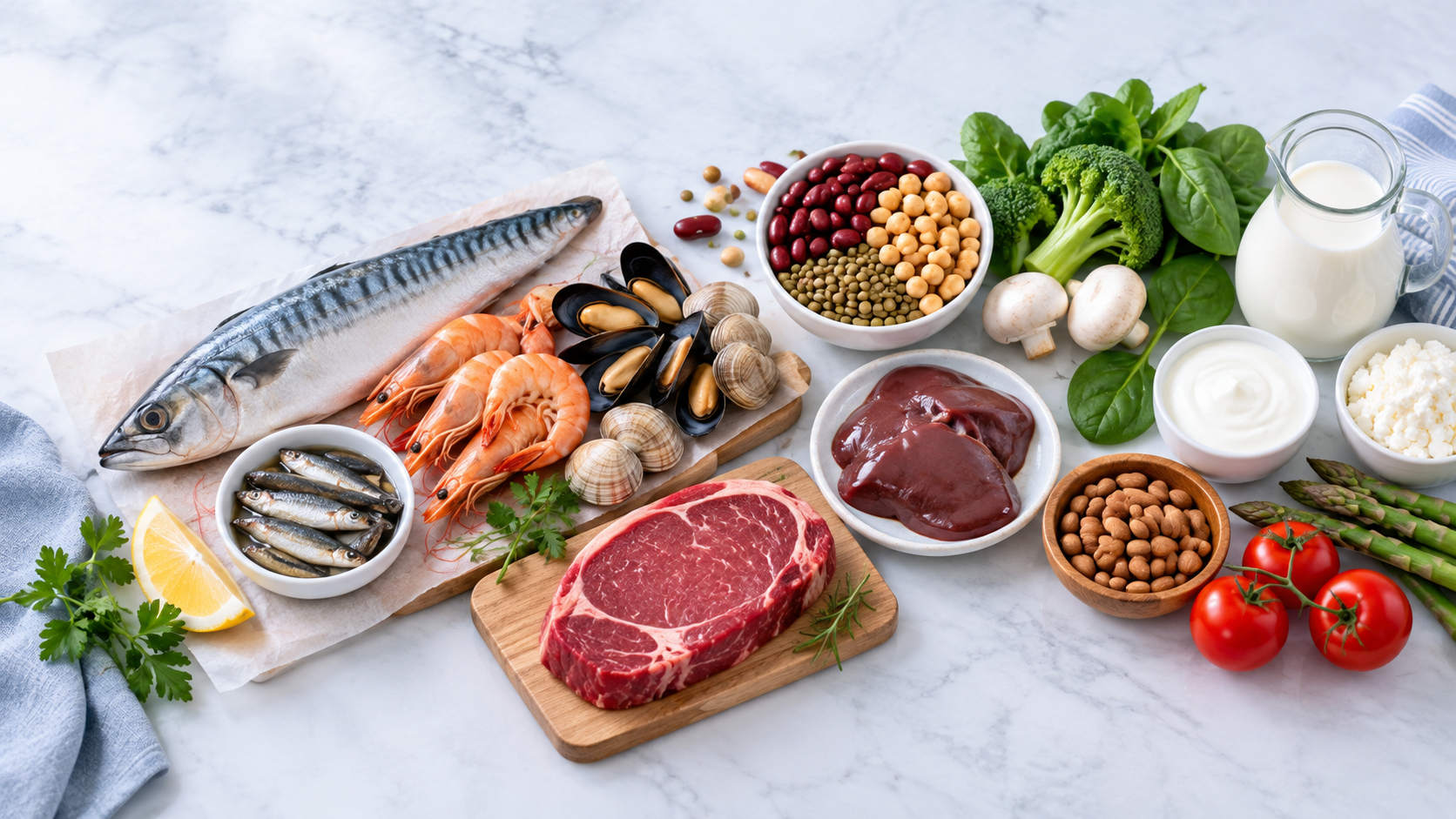
Purine charts can be useful, but they are often misused. The goal is not to remove every purine from the diet. Your body makes purines naturally, and research suggests that food source matters: animal purines are more strongly linked with gout risk than plant purines.
Looking for a specific food? Use the Gout Food & Drink Explorer to search measured purine values for 73 foods and drinks, with context about what the number does—and does not—mean for gout.
Foods worth the most attention
| Group | Examples | Practical gout guidance |
|---|---|---|
| Very high-purine animal foods | Liver, kidney, heart, sweetbreads and other organ meats | Best limited substantially, especially if gout is active or poorly controlled |
| Selected seafood | Anchovies, sardines, mussels, some shellfish and oily fish | Portion and frequency matter; track personal response |
| Red meat | Beef, lamb, pork, goat, veal | Moderate portions rather than treating it as completely forbidden |
| Poultry | Chicken, turkey, duck | Contains purines; amount varies by cut and serving size |
| Plant purines | Beans, lentils, peas, mushrooms, spinach, cauliflower | Generally do not need broad restriction; plant purines have not shown the same gout association as animal purines |
Turkey and chicken: light vs. dark meat
Purine concentration can vary by cut. Dark poultry meat may differ from breast meat, but published food tables are not perfectly standardized. Portion size and total animal-purine exposure are more useful than assuming one cut always causes a flare.
Why food lists cannot predict your next attack
A high-purine meal can increase short-term flare risk in someone with gout, but it does not guarantee an attack. Baseline urate, crystal burden, hydration, alcohol, medicines, illness and genetics all change the odds.
What about vegetables?
Do not automatically avoid vegetables because a chart labels them “high purine.” Studies have repeatedly failed to show the same risk pattern seen with meat and seafood.
Use this guide with the trigger tracker
If you suspect a particular food, record repeated exposures and flares rather than making major dietary restrictions after one episode. The gout flare and trigger tracker can help with that; for the science behind the table, see purines and gout, and for the overall eating pattern see the evidence-based gout diet.
This guide is educational and is not a substitute for individual dietetic or medical advice.
Sources
- Purine-rich foods and recurrent gout attacks
- 2024 systematic review and meta-analysis of dietary factors
- Arthritis Australia: Gout and Diet
Evidence checked September 2026.