
Gout usually progresses from silent urate buildup to acute flares, symptom-free intervals and, in some people, chronic tophaceous disease. The stages are useful because treatment goals change as…
Foundations
Posted on:
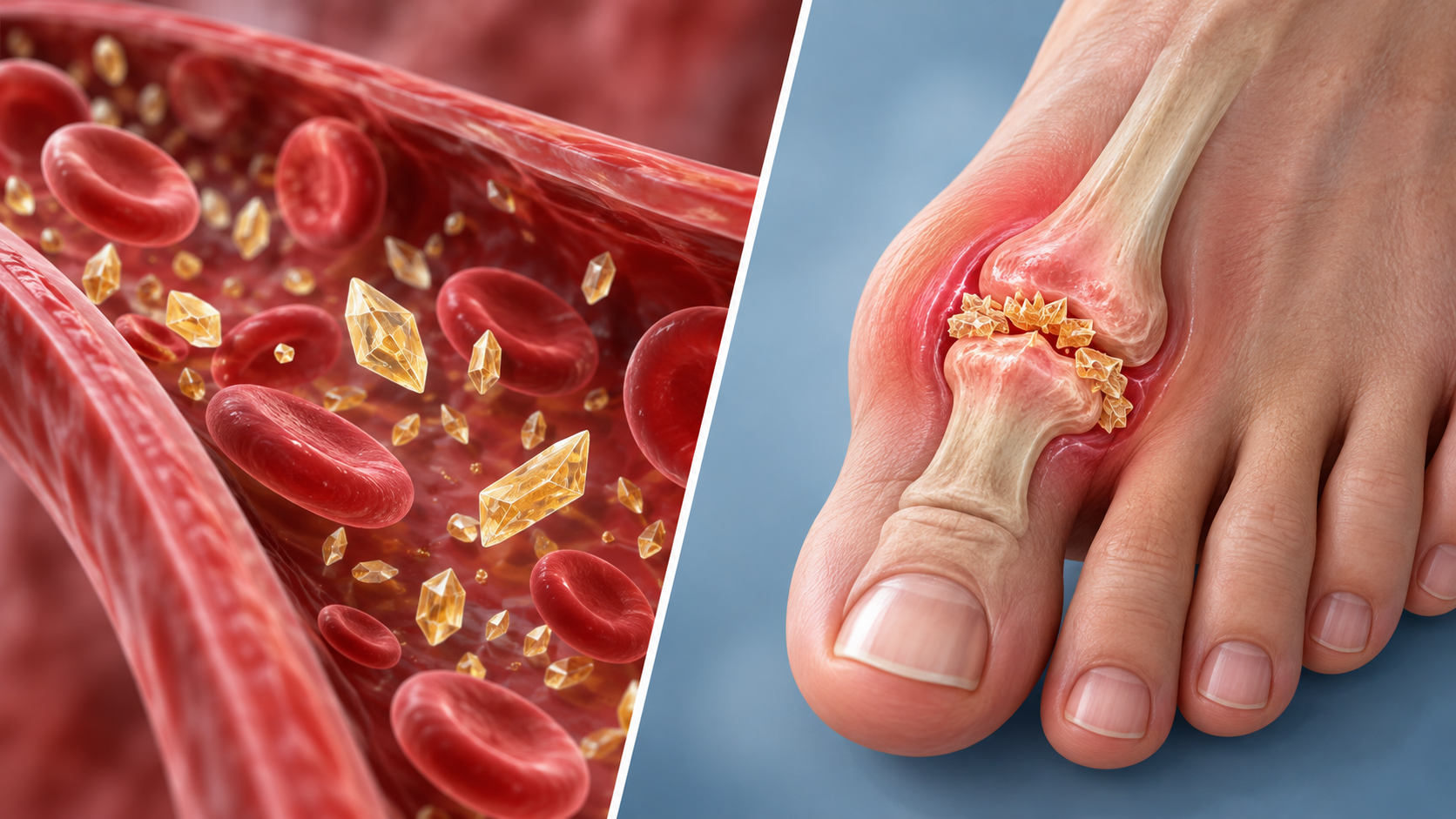
High Uric Acid vs. Gout: Hyperuricemia Explained
High uric acid and gout are related but not the same. Many people with hyperuricemia never develop gout, and urate can even measure lower during an acute flare.

Foundations
Posted on:
Gout Symptoms: Early Signs, What a Flare Feels Like and Where It Hurts
Gout usually causes sudden severe joint pain, swelling, warmth and redness. Learn the early signs, common locations and symptoms that need urgent evaluation.

Foundations
Posted on:
Who Gets Gout? Age, Sex, Menopause, Ethnicity and Risk
Gout risk reflects genetics, kidney handling of urate, age, sex, menopause, medications, body weight and other health conditions—not a single lifestyle choice.
Foundations
Posted on:
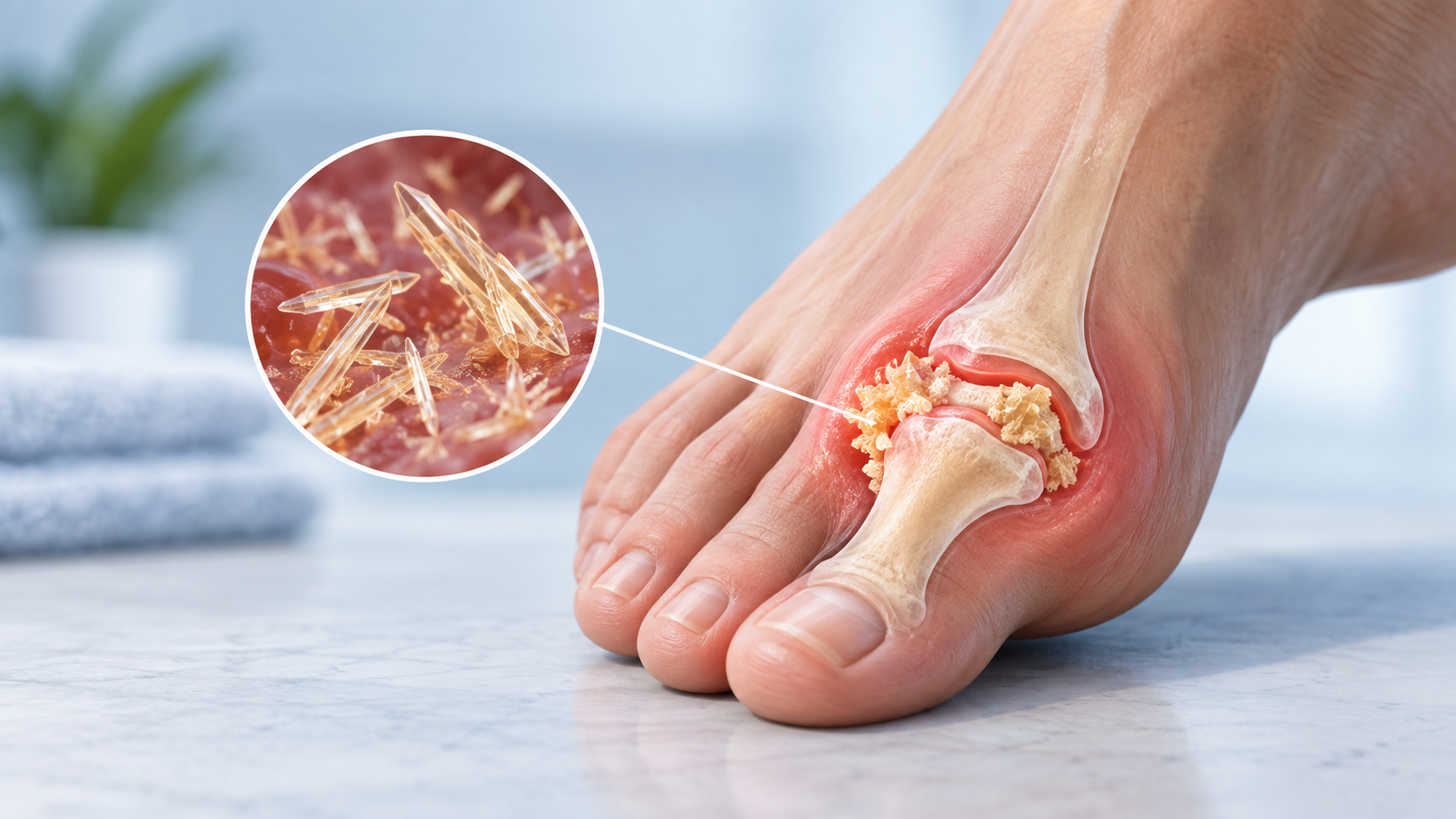
What Is Gout? Uric Acid, Crystals and Why It Happens
Gout is an inflammatory arthritis caused by monosodium urate crystals. Learn how high urate, genetics, kidney function and other factors combine to produce flares.