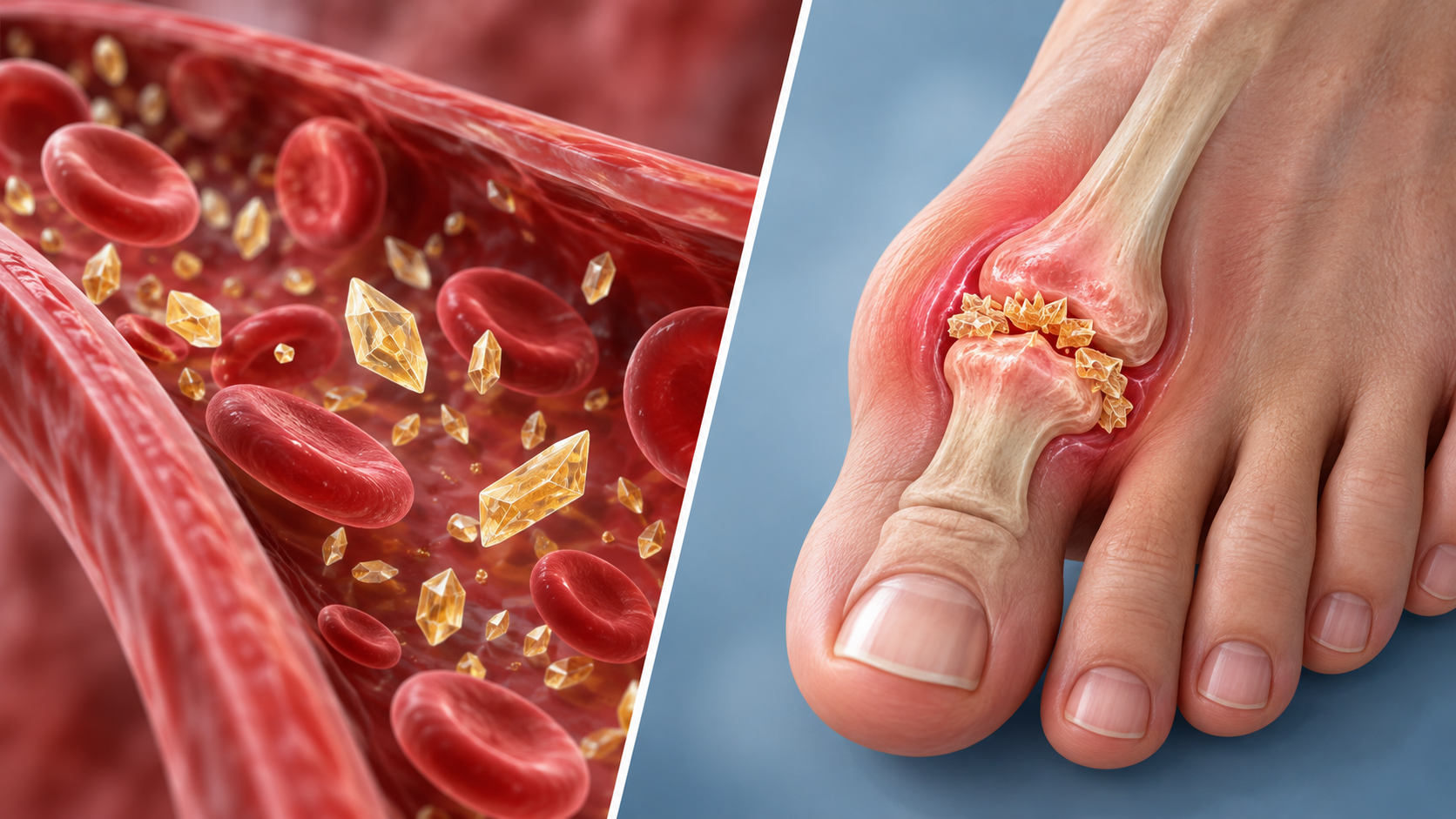
High uric acid is not the same thing as gout. Hyperuricemia means there is more urate in the blood than usual. Gout means monosodium urate crystals have formed and are causing disease. If you are trying to understand a result, start with how uric-acid blood tests are interpreted; if you monitor between visits, our home uric-acid testing guide explains the limits of home meters.
Can you have high uric acid without gout?
Yes. Many people with elevated serum urate never develop gout. The chance of crystal formation rises as urate levels rise and remain elevated, but genetics, kidney function, medications and other factors also affect risk.
Can you have gout with a normal uric acid result?
Yes. Serum urate can temporarily fall during an acute flare. NICE recommends repeating the measurement after the flare has settled if gout is strongly suspected and the result during the attack is below 6 mg/dL (360 micromol/L). For a fuller explanation of why timing matters and how an uncertain diagnosis is confirmed, see Can You Have Gout With Normal Uric Acid?.
What level confirms gout?
No blood-test number by itself proves gout. A serum urate of 6 mg/dL or more supports the diagnosis in someone with typical symptoms, but crystal identification from joint fluid remains the most definitive test when the diagnosis is uncertain.
Should asymptomatic high urate always be treated?
Not necessarily. Decisions depend on how high the level is, kidney disease, stones, medications and other risk factors. Major guidelines do not recommend treating every person with asymptomatic hyperuricemia as though they have gout.
What matters once gout is established?
For people receiving urate-lowering therapy, treatment is generally adjusted toward a serum urate target below 6 mg/dL. More severe gout may warrant a lower target.
This article is educational and is not a substitute for medical advice.
Sources
Evidence checked September 2026.