
A red, hot, painful joint is not always gout. Learn about common gout look-alikes, warning signs that need prompt medical care, and the questions that can help your…

Diagnosis
Posted on:
Can You Have Gout With Normal Uric Acid?
Yes. A normal uric acid result during an acute flare does not automatically rule out gout. Learn why timing matters, when testing may be repeated, and how clinicians…

Diagnosis / Symptoms
Posted on:
Could This Be Gout? Sudden Joint Pain With No Injury
A joint that becomes intensely painful overnight—sometimes so tender that even a bedsheet hurts—can fit the pattern of gout. But gout is not the only possibility. Learn what…
Diagnosis
Posted on:
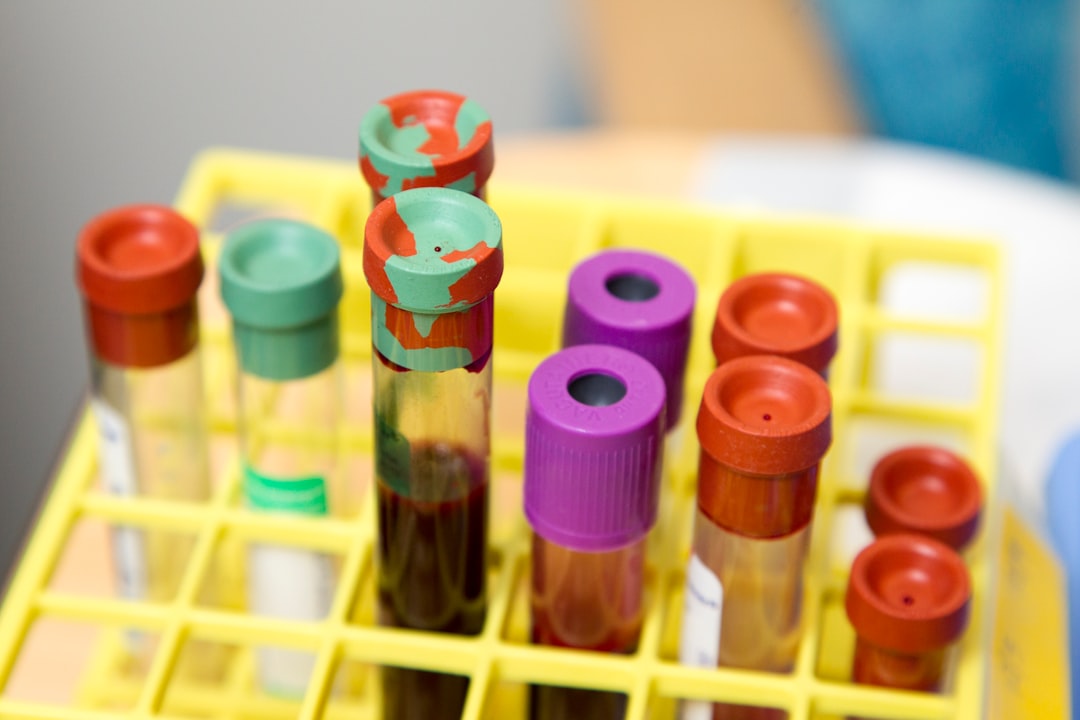
Uric Acid Blood Tests: Normal, High and During a Gout Flare
Serum urate is useful for diagnosing and managing gout, but timing matters. Levels can fall during an acute flare, and treatment targets differ from laboratory reference ranges.
Diagnosis
Posted on:
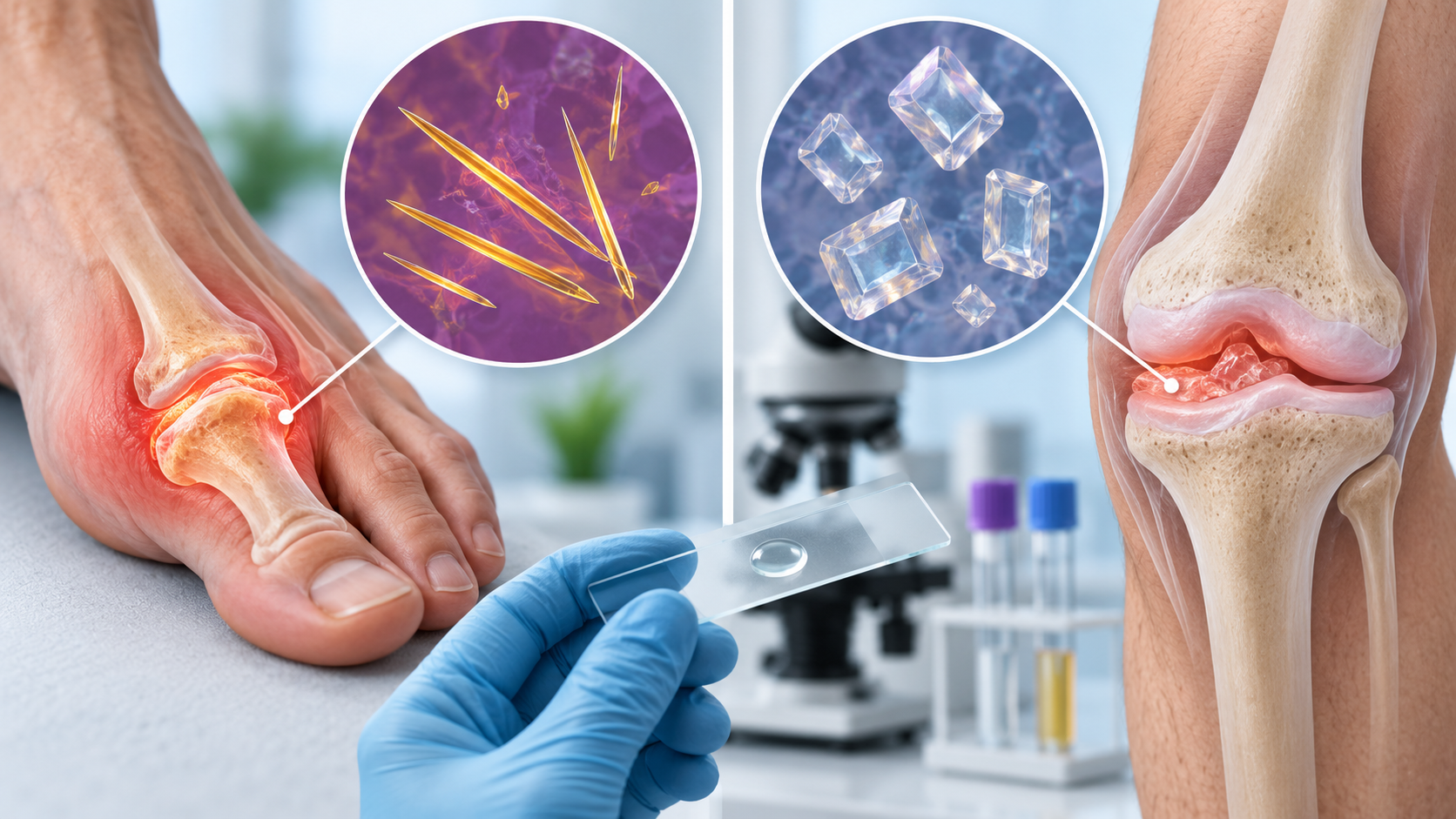
Gout vs. Pseudogout: Symptoms, Crystals and Testing
Gout and pseudogout can look very similar, but they involve different crystals and often affect different joints. Joint-fluid testing can distinguish them when the diagnosis is uncertain.
Diagnosis
Posted on:
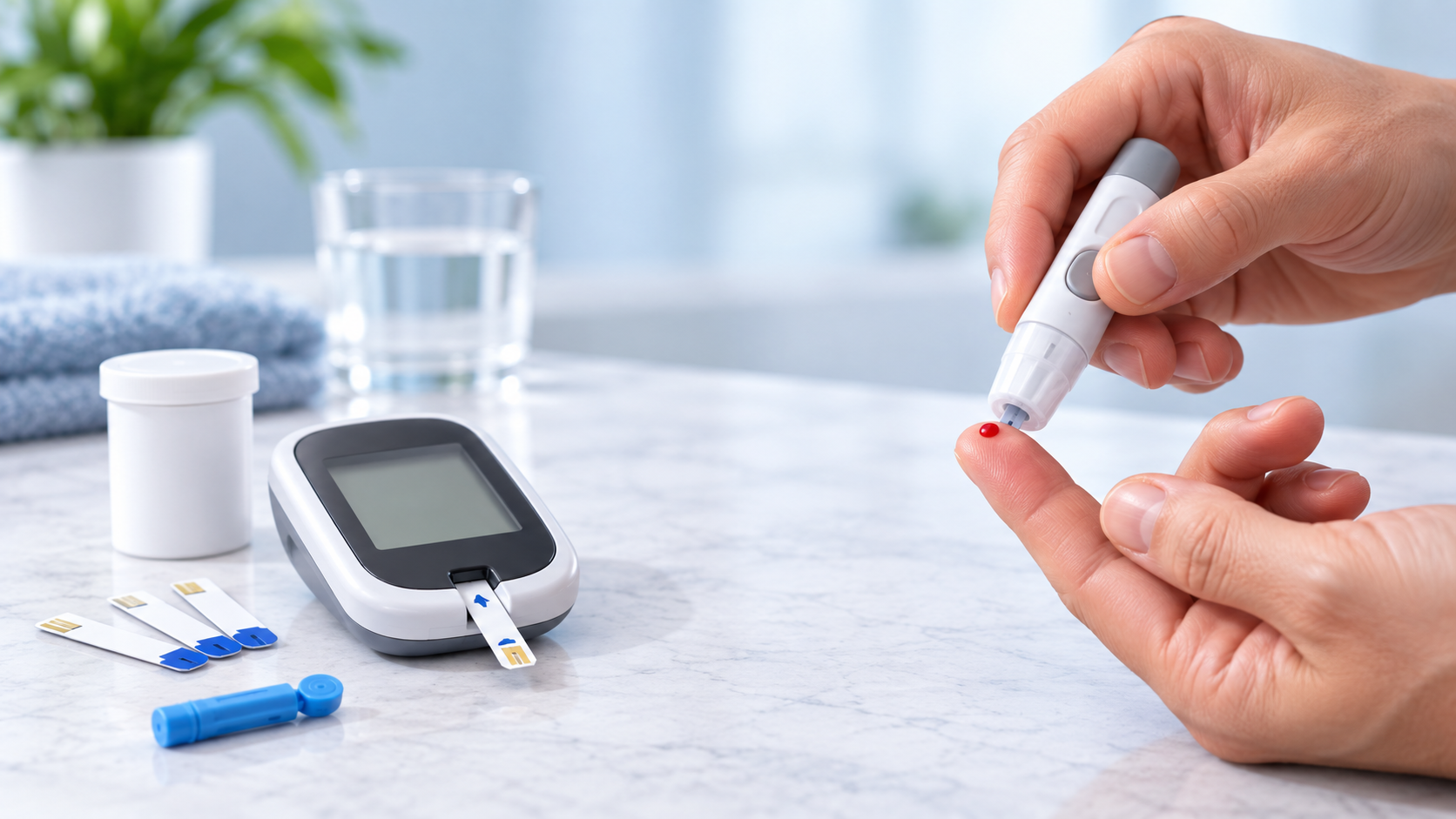
How Can I Check My Uric Acid at Home? Home Tests & Meters
You can check uric acid at home with a finger-prick blood meter, but home results are best used for tracking trends and should be reviewed with a doctor.…
Diagnosis
Posted on:
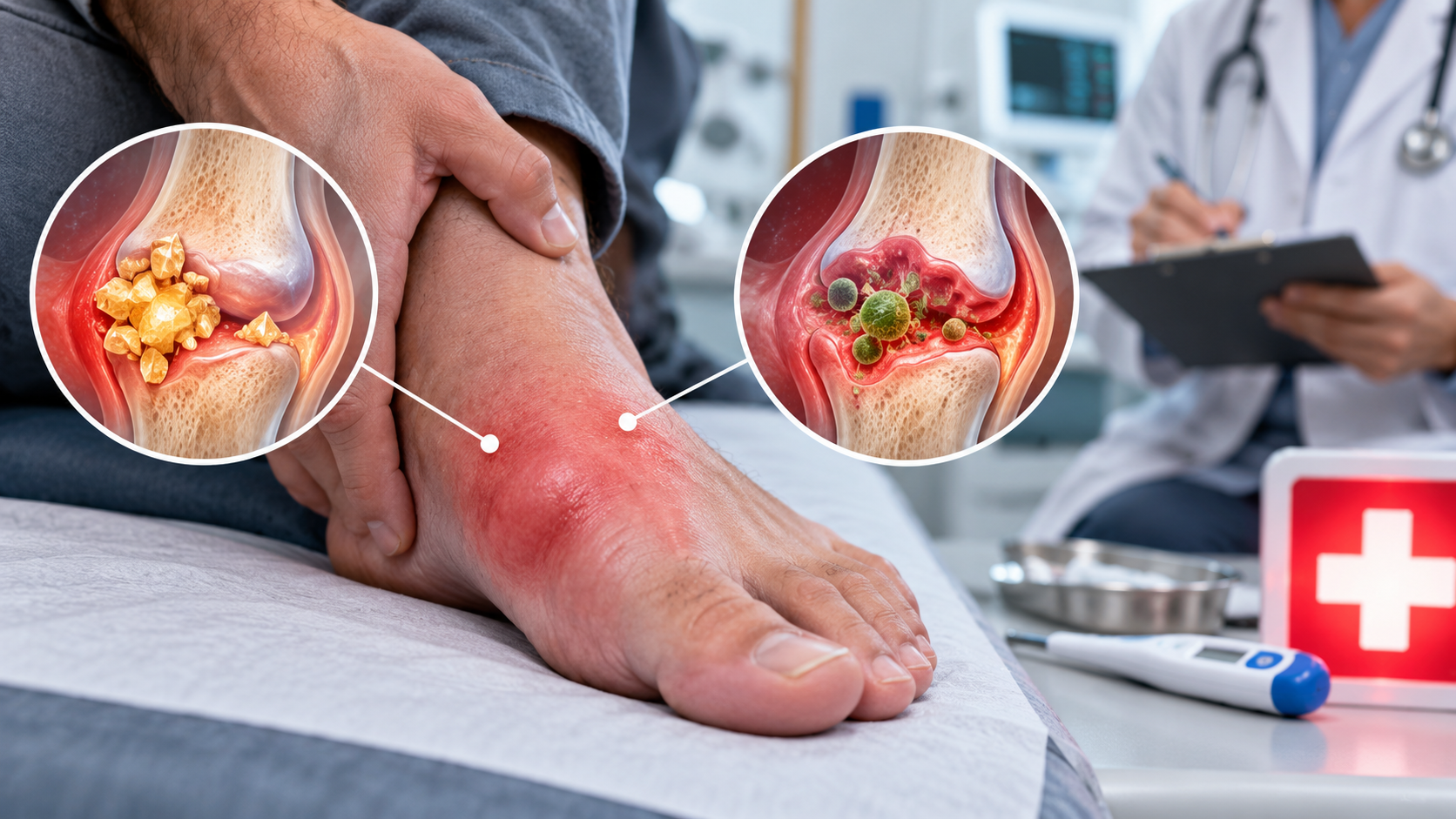
Gout vs. Joint Infection: When a Red, Hot Joint Is an Emergency
Septic arthritis can look like gout but may require urgent treatment. Learn why a first or unusual hot, swollen joint—especially with fever or systemic illness—needs prompt assessment.
Diagnosis
Posted on:
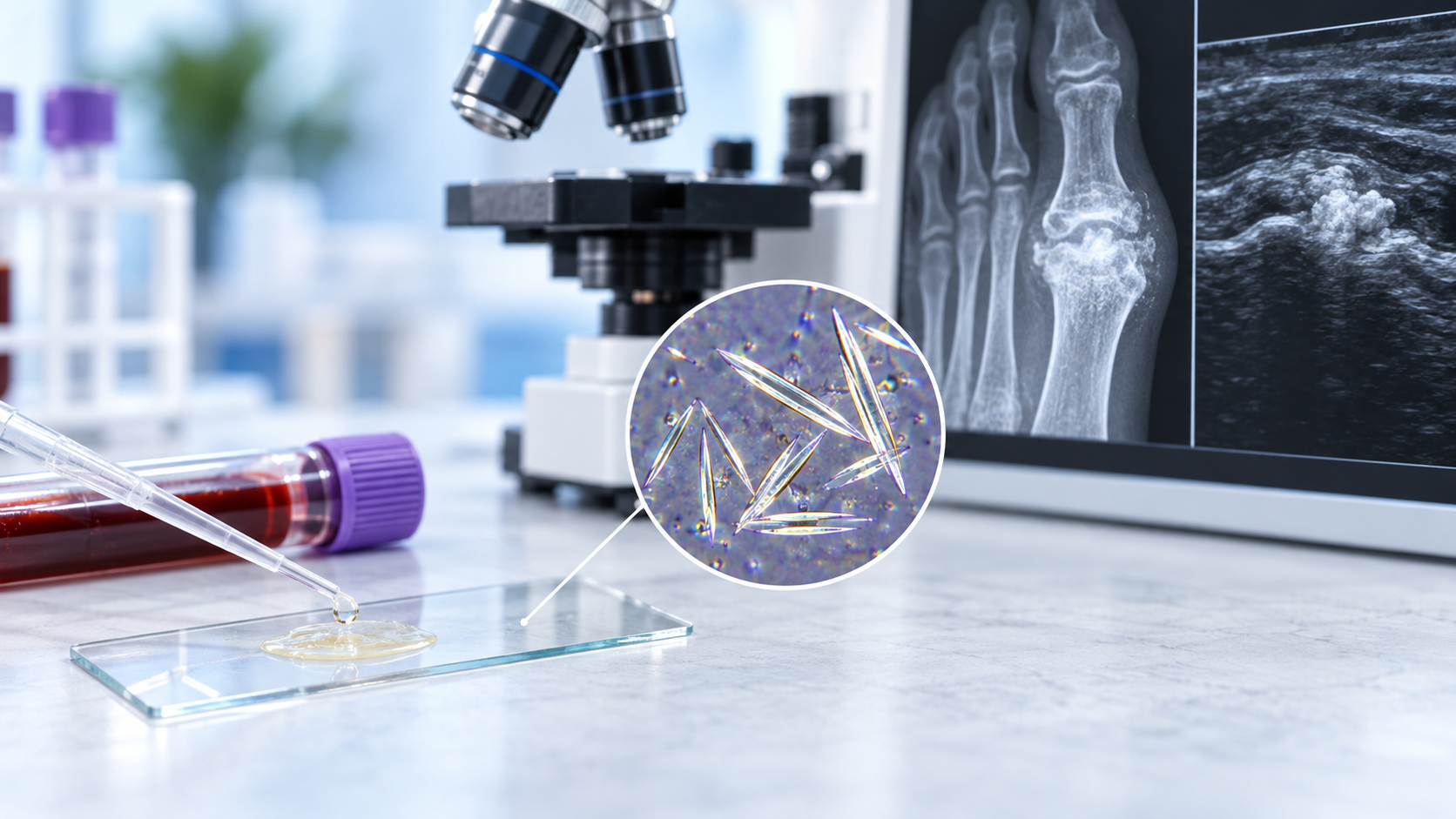
How Gout Is Diagnosed: Blood Tests, Joint Fluid and Imaging
Gout is diagnosed from the clinical pattern plus serum urate, and sometimes joint-fluid microscopy or imaging. A uric-acid blood test alone does not prove or exclude gout.
Diagnosis
Posted on:
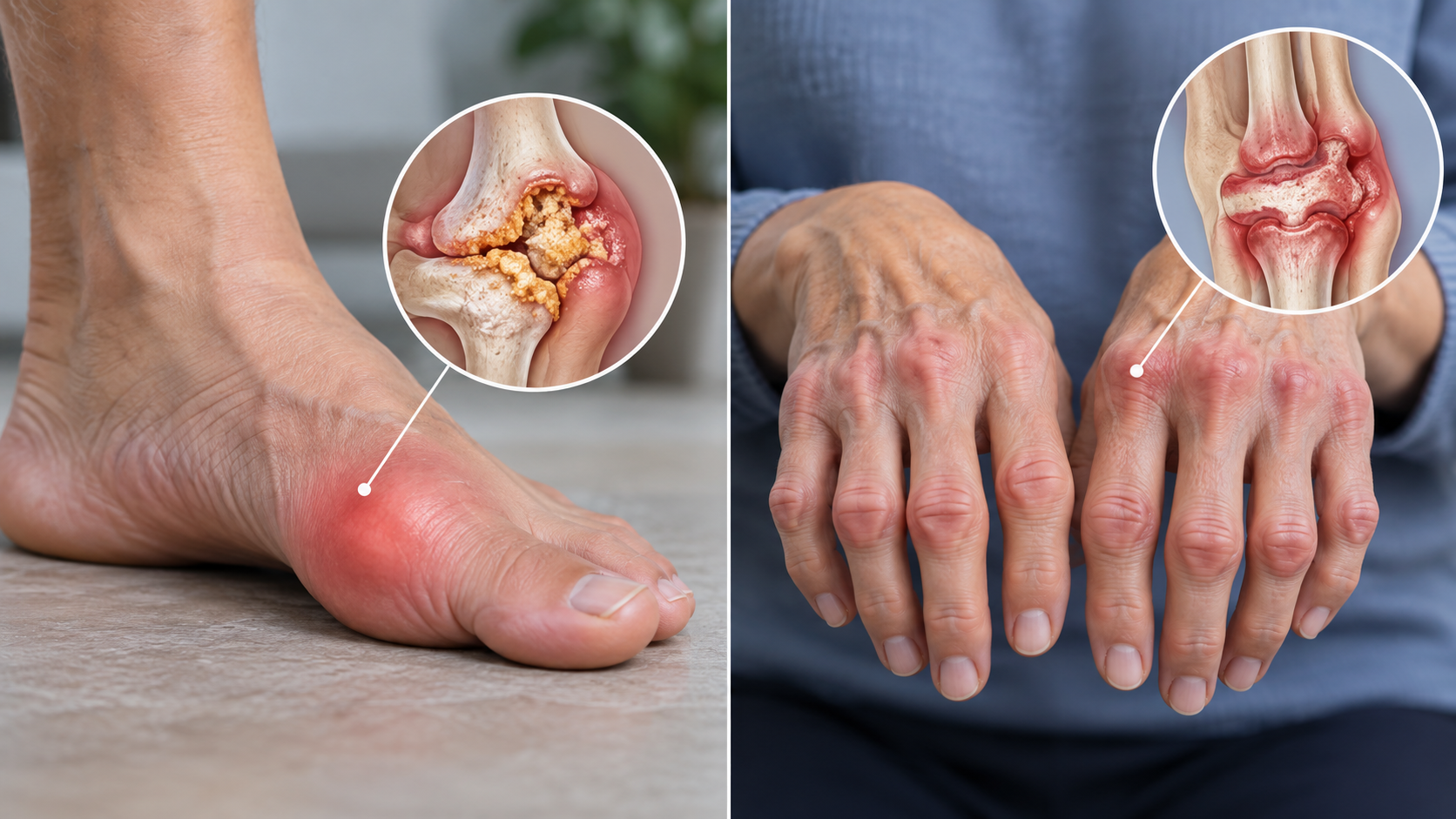
Gout vs. Rheumatoid Arthritis and Other Arthritis
Gout can resemble rheumatoid arthritis, osteoarthritis and other inflammatory conditions. The pattern of joints, blood tests, imaging and crystal analysis help separate them.