
Long-term gout treatment aims to keep serum urate below target so urate crystals dissolve over time. Here is how allopurinol, febuxostat and treat-to-target care fit together.

Treatment
Posted on:
Why Does Gout Keep Coming Back? Understanding Recurrent Flares
Recurring gout attacks usually mean urate crystals remain in the body. Learn why flares recur even when you feel normal between attacks and what reduces recurrence.
Treatment
Posted on:
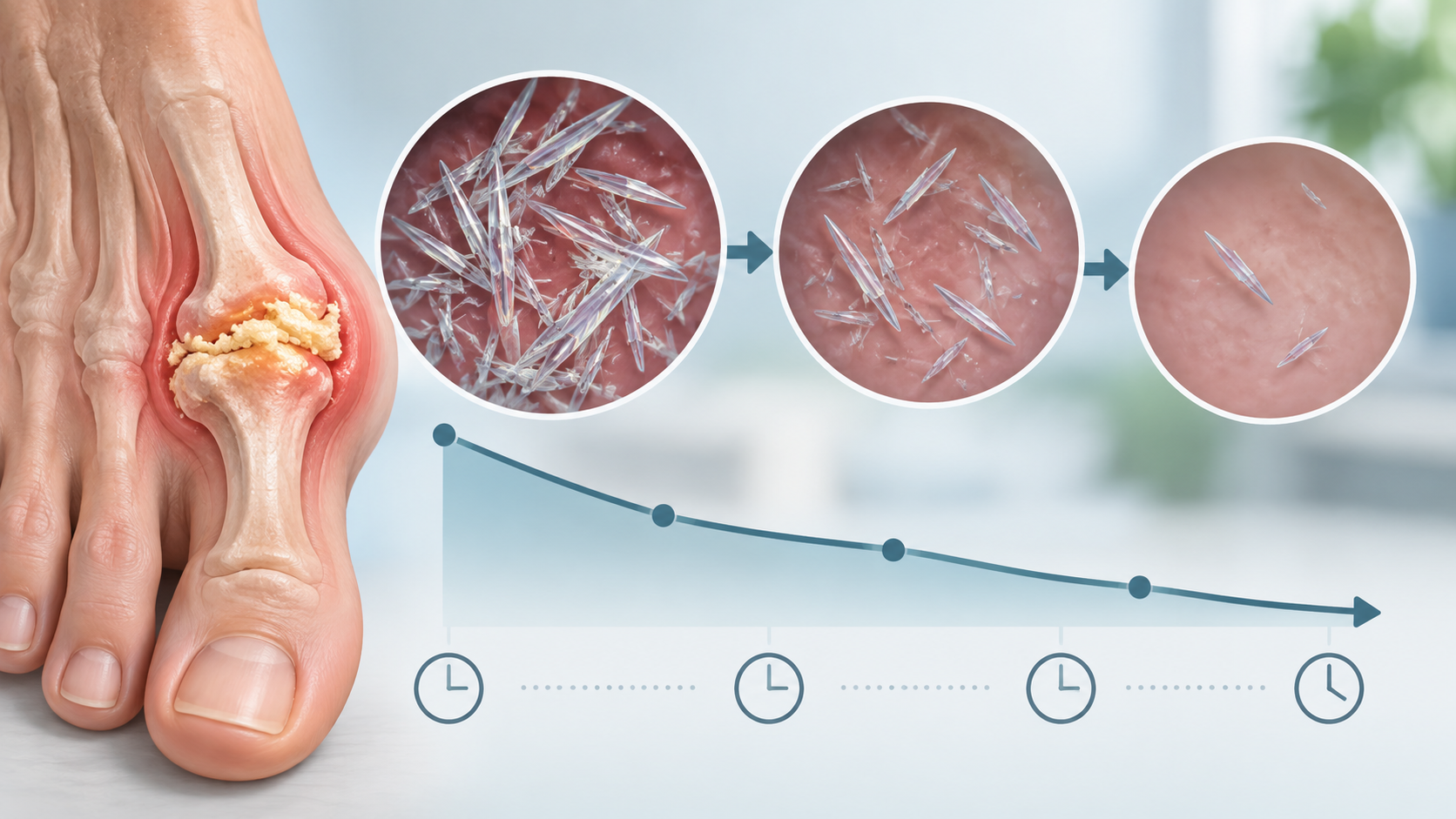
How Long Do Gout Crystals Take to Dissolve?
Gout crystals can dissolve when serum urate is kept low enough, but the process usually takes months to years—not days. Here is what current evidence says.

Treatment
Posted on:
Gout Flare Relief: What Helps and When to Seek Care
For an acute gout flare, evidence-based treatment centers on anti-inflammatory medication, rest, and symptom control—not detoxes or crystal-flushing remedies.

Treatment
Posted on:
Gout Medications: Colchicine, NSAIDs, Steroids and Urate-Lowering Drugs
Gout treatment has two different jobs: control inflammation during a flare and lower urate long term. Here is where colchicine, NSAIDs, steroids, allopurinol and febuxostat fit.

Treatment
Posted on:
How to Prevent Future Gout Attacks: A Long-Term Plan
Preventing gout attacks means controlling the underlying urate problem, using flare prevention when needed, and addressing personal contributors such as alcohol, weight, dehydration and medicines.

Treatment
Posted on:
How Long Does a Gout Attack Last? What to Expect During a Flare
A gout flare often peaks quickly and can last several days to more than a week. Treatment started early can reduce symptoms.

Treatment
Posted on:
Is Gout Curable? What Long-Term Control Really Means
Gout is usually considered a lifelong condition, but effective urate-lowering treatment can dissolve crystals, prevent flares, and produce long periods without symptoms.