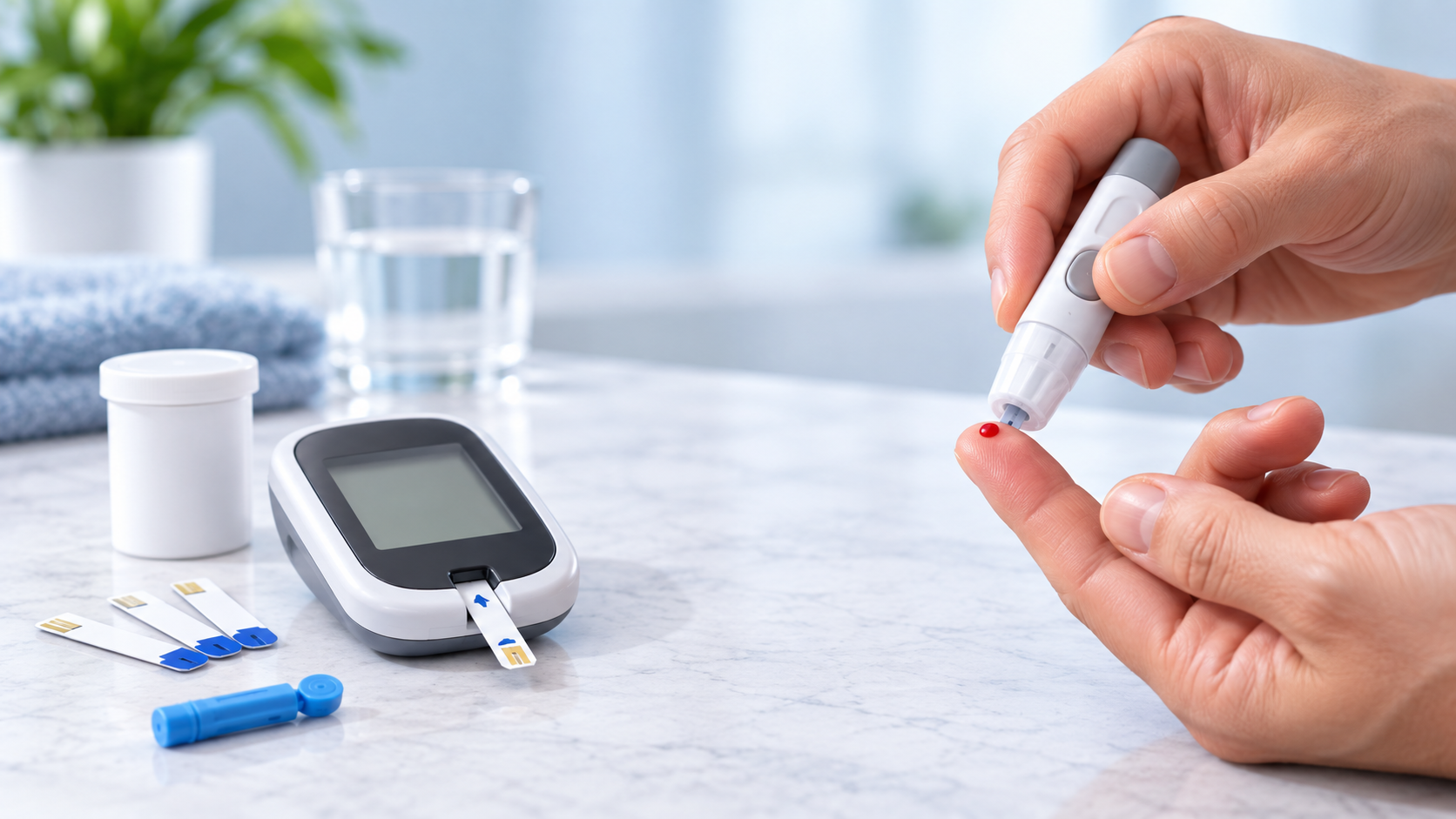
Quick answer: Yes, you can check uric acid at home. The most useful home option is a meter that measures uric acid from a small finger-prick blood sample. These devices can be helpful for following a trend between office visits, but they are not a substitute for a laboratory blood test and they cannot diagnose gout by themselves.
If you test at home, write down the result and take it to your doctor or rheumatologist. A clinician can decide whether the number should be confirmed with a laboratory serum urate test and how it fits with your symptoms, medications, kidney function, and treatment plan.
This article is for general education. A home uric acid reading should not be used on its own to diagnose gout or to start, stop, or change medication.
Home uric-acid reading: what to do next
A home reading is only one piece of the picture. Record the number, date and time, meter model, whether you were having a gout flare or other symptoms, and any recent medication changes. Bring that record to your doctor, especially if readings are repeatedly high or low, are changing substantially, or do not match how you feel.
Seek prompt medical care for a new hot, red, very painful or rapidly worsening joint—especially with fever or feeling unwell—because an infection can sometimes look like gout.

The Best Way to Check Uric Acid at Home
For most people interested in monitoring gout or high uric acid, the relevant measurement is uric acid in the blood, also called serum urate when measured in a laboratory. Home meters generally use a tiny sample of capillary blood from a fingertip and a disposable test strip.
The process is similar to using a blood glucose meter: insert the correct test strip, use a fresh lancet to obtain a small drop of blood, apply the sample exactly as directed, and wait for the meter to display a result, usually in milligrams per deciliter (mg/dL).
Home testing is most useful for watching a pattern over time. A single reading can be affected by normal biological variation, hydration, recent food or alcohol intake, illness, activity, temperature, medications, and testing technique.
A Home Uric Acid Meter Worth Knowing About
If your clinician wants you to monitor uric acid at home, one device worth discussing is the UASure II Blood Uric Acid Monitoring System. It measures uric acid from fingertip capillary blood and displays a result in about 10 seconds. The meter stores previous readings, which can make it easier to show your doctor a trend rather than relying on memory.
The U.S. Food and Drug Administration cleared the UASure II system in 2025 for prescription home use by people with gout as an aid to monitoring uric acid control. The FDA labeling also makes an important point: the system is not intended to diagnose gout or hyperuricemia, and medication should not be changed based on a home result without talking with a healthcare professional.
Where to buy UASure II: UASure sells the meter, replacement test strips, lancets, and control solution directly from its own product page. If you decide with your healthcare provider that home monitoring makes sense, view UASure’s current uric acid products and availability here. Buying from the manufacturer also makes it easier to make sure you are getting strips made for the correct meter.
Truth About Gout does not currently receive a commission or other compensation if you purchase through this UASure link.
You can also review the FDA 510(k) record for UASure II.
UASure maintains a useful uric acid knowledge page explaining blood uric acid readings, why levels can fluctuate, and testing frequency. Keep in mind that this is information from the device manufacturer, not independent medical guidance. For diagnosis and treatment decisions, use your healthcare provider and the NIH, American College of Rheumatology, Mayo Clinic, and MedlinePlus resources linked below.
Before buying any home uric acid meter: verify that replacement strips for the exact model are readily available, check strip expiration dates, confirm the measurement units, and read the current device labeling. Avoid assuming that every product advertised online as a uric acid tester has the same regulatory status or accuracy.
What About Urine or Saliva Uric Acid Test Strips?
Urine uric acid testing is a real medical test, but it answers a different question from a blood uric acid measurement. Clinical urine testing commonly involves collecting urine over 24 hours and may be used in the evaluation of kidney stones or uric acid handling. A simple urine or saliva color strip should not be treated as a substitute for a blood uric acid result when you are trying to understand gout.
The National Library of Medicine’s MedlinePlus uric acid test guide explains the differences between blood and urine uric acid testing.
How to Get More Useful Home Readings
A home meter is only as useful as the way it is used. Follow the instructions for your exact device rather than improvising. In general, these habits make results easier to compare:
- Wash and dry your hands thoroughly before testing.
- Use the correct, unexpired test strips for your meter.
- Store strips according to the manufacturer’s directions.
- Use a fresh lancet and obtain the sample size the meter requires.
- Test under reasonably consistent conditions when you are trying to follow a trend.
- Record the date, time, result, and anything unusual such as illness, dehydration, a gout flare, or a medication change.
- If a result is surprising, do not chase the number with repeated medication changes. Ask your healthcare provider whether it should be confirmed with a laboratory test.
What Number Should You Be Looking For?
There is an important difference between a laboratory’s reference range and a treatment target for someone who has gout. Reference ranges can vary by laboratory, so the range printed on your own lab report matters.
For people being treated for gout with urate-lowering therapy, the American College of Rheumatology describes a treat-to-target approach using serial serum urate measurements, with a target of below 6 mg/dL (about 360 micromol/L) for most patients. Readers in the UK, Australia, Kenya and many other countries will often see urate reported in micromoles per litre rather than mg/dL. Your individual target may be different, which is another reason a home reading is best interpreted with the clinician managing your gout.
For more detail, see the American College of Rheumatology’s gout information and our article on what an alarming uric acid level may mean.
A Normal Uric Acid Reading Does Not Rule Out Gout
This is easy to misunderstand. A high uric acid level increases the likelihood of urate crystal formation over time, but many people with high uric acid never develop gout. Conversely, a person can have a uric acid reading that is not especially high during an acute gout flare.
That means a home meter cannot tell you, by itself, whether a painful, red, swollen joint is gout. Diagnosis may involve your history and examination, laboratory testing, imaging, or analysis of fluid from the affected joint.
The National Institutes of Health’s NIAMS guide to gout diagnosis and treatment explains how clinicians diagnose gout and why a urate blood test is only one part of the picture.
What to Do After You Test Your Uric Acid at Home
Do not let the number end with the meter. If you are monitoring uric acid because of gout, recurrent joint symptoms, kidney stones, or a previous high laboratory result, take your readings to your healthcare provider.
Because uric acid can vary with food, activity, medications, illness, hydration, and other factors, a little context can make your readings much more useful to your clinician.
Simple Uric Acid Tracking Template
Copy this into a notes app, spreadsheet, or print this section and bring it to your next appointment.
| Date / time | Uric acid (mg/dL) | Symptoms / flare? | Medications / changes | Food, activity, illness or other notes |
|---|---|---|---|---|
Also bring: the make and model of your meter and any recent laboratory uric acid results, if you have them.
Your doctor can decide whether to repeat the measurement with a laboratory blood test, whether the pattern is meaningful, and whether anything about your treatment plan should change. If you are taking allopurinol, febuxostat, probenecid, or another urate-lowering medication, do not change the dose based solely on a home reading unless your clinician has given you a specific plan for doing so.
For an authoritative overview of what a high uric acid result does and does not mean, see Mayo Clinic’s guide to high uric acid levels.
When a Doctor’s Visit Matters More Than Another Home Test
Home monitoring is not the right tool for every situation. A new hot, red, very painful joint needs clinical evaluation, especially if you also have fever or feel ill, because infection and other problems can resemble gout. A home uric acid result cannot distinguish those conditions.
Likewise, if your readings are unexpectedly high or low, are changing substantially, or do not match how you feel, bring the meter record to your healthcare provider rather than trying to interpret the result in isolation.
Home Meter vs. Laboratory Uric Acid Test
A laboratory blood test remains the better reference point when you are establishing a diagnosis, setting a treatment target, checking a surprising result, or making a medication decision. A home meter can be useful between those visits because it is quick and can show whether your readings appear to be trending up, down, or staying fairly stable.
If you use a home meter regularly, one practical idea is to bring it with you when you have a scheduled laboratory uric acid test. Ask your clinician whether it makes sense to take a home reading close to the time of the blood draw. Comparing the two can give you a better sense of how your meter behaves for you. Do not create a homemade correction factor from one comparison; simply use the information as another data point to discuss with your provider.
You may also want to read our uric acid tracking guide and the difference between high uric acid and gout.
Frequently Asked Questions
Can I diagnose gout with a home uric acid test?
No. A home uric acid measurement can provide useful information, but gout is not diagnosed from one uric acid number. Your symptoms, examination, laboratory testing, and sometimes joint-fluid testing or imaging may be needed.
Can uric acid be normal during a gout attack?
Yes. A normal or lower reading during a flare does not rule out gout. If you have a new or severe swollen joint, seek medical evaluation rather than relying on the meter.
How often should I test uric acid at home?
There is no single schedule that fits everyone. Testing frequency should depend on why you are monitoring, whether your treatment is changing, and what your healthcare provider wants to learn from the readings. Consistency is generally more useful than testing repeatedly whenever you are worried about one number.
What should I do if my home uric acid level is high?
Record the result and discuss it with your healthcare provider, especially if it is unexpected or repeatedly elevated. Do not diagnose yourself or change prescription medication based on a single home measurement.
Can I lower uric acid with diet alone?
Diet and lifestyle can influence uric acid, but the amount varies from person to person and many people with gout still need medication to reach an appropriate urate target. See our guide to reducing uric acid levels for a broader discussion.
Bottom Line
You can check uric acid at home with a finger-prick blood meter, and the results may be useful for tracking a trend. The most important next step is what you do with the information: record it, bring it to your doctor, and confirm important or unexpected results with appropriate laboratory testing before making treatment decisions.