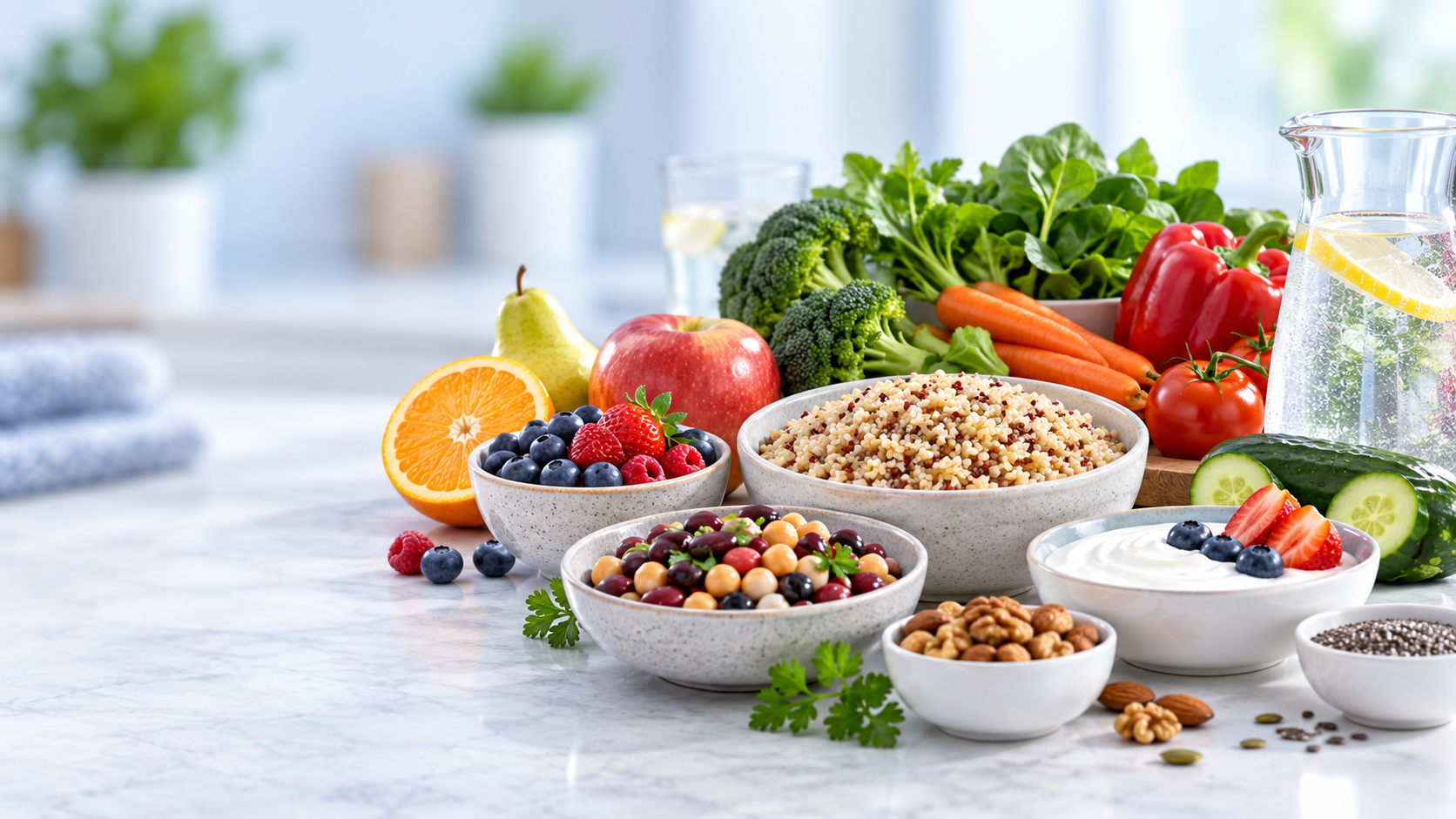
Gout nutrition is not only about foods to avoid. Several foods and dietary patterns are associated with lower gout or hyperuricemia risk, although association is not the same as proving that a food treats existing gout. For the full context, see the evidence-based gout diet; for why plant and animal purines do not appear to carry identical risk, see purines and gout.
Low-fat dairy
Observational studies have consistently associated dairy intake, particularly low-fat dairy, with lower gout risk. Short-term research also suggests dairy can modestly affect urate handling.
Vegetables
Vegetables should not be broadly restricted because some contain purines. High-purine vegetables have not shown the same gout association as high-purine animal foods in population studies.
Plant proteins
Soy foods, beans, lentils, nuts and other plant proteins can fit well in a gout-friendly diet. Plant purines appear to have a different relationship with gout risk than meat and seafood.
Coffee
Observational studies and meta-analyses have associated coffee consumption with lower incident gout risk, although effects on serum urate have been less consistent. Coffee should not be started as a “gout treatment,” and individual caffeine tolerance still matters.
Whole dietary pattern matters
A balanced pattern rich in vegetables, whole grains and plant proteins, with appropriate dairy if tolerated, is more useful than chasing a single “superfood.”
What about cherries?
Tart cherry has enough specific gout research to deserve its own evidence review. The evidence is promising but mixed, so we treat it as a possible adjunct rather than a proven therapy.
This article is educational and is not a substitute for medical or dietetic advice.
Sources
- 2024 systematic review and meta-analysis of dietary factors
- Dairy intake, hyperuricemia and gout
- Coffee and gout: systematic review and meta-analysis
- NICE NG219
Evidence checked September 2026.